Last-Mile Innovation: The Future of Final Delivery
By Robert Martinez • December 14, 2024
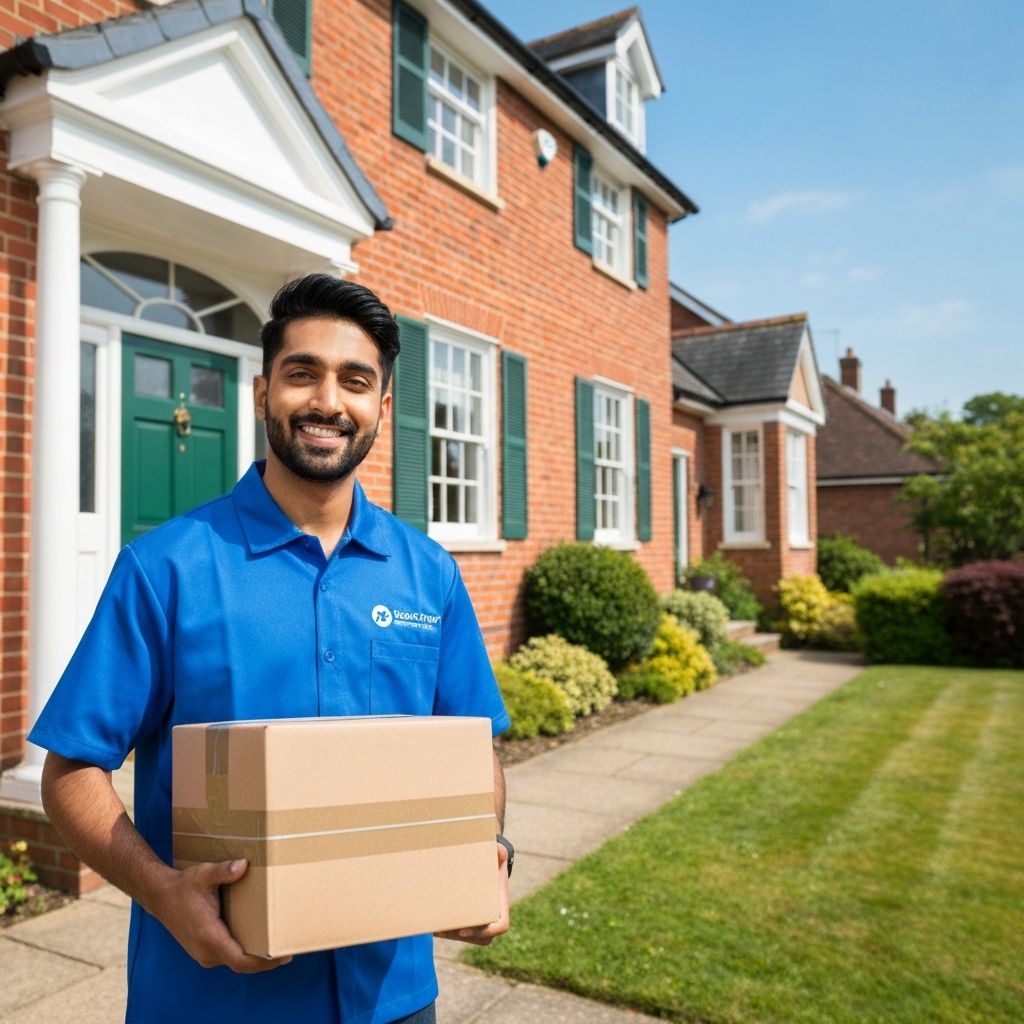
The last mile—the final leg of the delivery journey from distribution center to customer—represents the most complex and expensive stage of modern e-commerce logistics. While moving goods across continents through ocean freight or air cargo is highly optimized, delivering packages to individual customers remains labor-intensive and expensive, consuming 50-60% of total shipping costs in many operations. The last mile also represents the primary touchpoint between logistics companies and customers, directly impacting customer satisfaction and brand perception. Innovation in last-mile delivery has become a critical focus for logistics companies seeking to reduce costs while improving customer experience.
The Challenges of Last-Mile Delivery
Last-mile delivery faces unique challenges that distinguish it from other stages of logistics. Customer locations are geographically dispersed, requiring delivery routes to cover large areas with relatively low package density. Customer availability varies unpredictably—many customers are not home during delivery attempts, resulting in failed delivery attempts that increase costs and reduce satisfaction. Safety concerns limit delivery times to daylight hours in many locations. Vehicle access is limited in dense urban areas where traffic congestion and narrow streets challenge large delivery vehicles.
These challenges result in high costs and customer dissatisfaction. Failed delivery attempts require rescheduling, increasing overall delivery time and cost. Extended delivery windows create uncertainty for customers who must remain home to receive packages. In urban areas, double parking and traffic congestion add time and fuel costs. These factors combine to make last-mile delivery one of the costliest and least efficient stages of logistics operations.
Crowdsourced and Flexible Delivery Models
Innovative companies have experimented with crowdsourced delivery models where independent contractors using their personal vehicles make deliveries, often using their smartphones to coordinate routes and communication with customers. These models reduce delivery costs by utilizing existing vehicle capacity that would otherwise be underused. They also provide flexibility, as independent contractors can work hours that suit their schedules.
More sophisticated flexible delivery models offer customers multiple options for receiving packages. Instead of requiring customer availability at their home, customers can choose delivery to nearby pickup points, lockers, shops, or other convenient locations. This flexibility dramatically improves delivery success rates and customer satisfaction, as customers can receive packages when convenient rather than being constrained by delivery windows.
Autonomous Vehicles and Robots
Autonomous vehicle technology promises to revolutionize last-mile delivery by eliminating labor costs—the primary expense in traditional delivery models. Autonomous delivery vehicles could operate 24/7, making deliveries at any hour without constraint to driver working hours. Autonomous vehicles could operate more safely and efficiently than human drivers, potentially reducing accidents and fuel costs.
While fully autonomous vehicles operating on public streets remain years away from widespread deployment, autonomous robots suitable for sidewalk and pedestrian path delivery are rapidly advancing. These small robots can navigate sidewalks, avoid obstacles, and deliver packages to customer doors. Operating smaller vehicles also provides advantages in urban environments where large vehicles struggle with access and parking.
Early autonomous delivery pilots in various cities have demonstrated feasibility and customer acceptance. However, regulatory challenges remain, as governments develop rules governing autonomous vehicle operation. Safety standards, liability frameworks, and operational restrictions continue to evolve as this technology matures.
Drone Delivery Systems
Drone delivery promises to bypass ground-based delivery entirely by delivering packages through the air. This approach offers potential advantages including bypassing traffic congestion, accessing remote locations difficult to reach by road, and dramatically reducing delivery time. Several companies have conducted successful drone delivery pilots, demonstrating technical feasibility.
However, practical deployment at scale faces significant challenges. Regulatory restrictions on drone operation remain stringent in most countries. Weather conditions, noise concerns, safety considerations, and the limited payload capacity of current drones restrict their applicability. For these reasons, drone delivery is likely to remain limited to specific use cases such as emergency medical deliveries or deliveries to remote locations, rather than becoming a primary delivery method for general e-commerce.
Micro-Fulfillment and Distributed Inventory
Another innovation approach involves distributing inventory to locations closer to customers, reducing delivery distances and delivery costs. Micro-fulfillment centers located in urban areas can fulfill orders for same-day or next-day delivery, dramatically improving customer experience. Some retailers have experimented with utilizing retail stores as micro-fulfillment centers, fulfilling online orders from inventory in nearby stores.
This approach requires carrying more total inventory across more locations, increasing inventory costs. However, for high-demand products, the reduced delivery costs and improved customer satisfaction can justify these increased inventory costs. The optimal approach varies by product category, with some products benefiting from distributed inventory and others better served by centralized warehouses.
Technology and Visibility
Modern last-mile delivery leverages sophisticated technology for route optimization, real-time communication with customers, and flexible delivery options. Mobile apps enable customers to communicate directly with drivers, provide specific delivery instructions, or adjust delivery preferences. Real-time tracking provides customers with visibility into delivery status and precise arrival windows, reducing uncertainty and improving satisfaction.
Route optimization algorithms continuously improve efficiency by accounting for traffic conditions, customer preferences, vehicle characteristics, and other factors. Machine learning algorithms learn from historical data to make increasingly accurate predictions about optimal routes and delivery times.
Sustainability in Last-Mile Delivery
The environmental impact of last-mile delivery has become increasingly important as sustainability concerns grow. Electric vehicles and cargo bikes offer lower-emission alternatives to traditional delivery vans. Consolidation of shipments and route optimization reduce miles driven and fuel consumed. Some innovative retailers have experimented with delivery during off-peak hours or using pedestrian-friendly methods in urban areas.
The Future of Last-Mile Delivery
The future of last-mile delivery will likely involve a portfolio of approaches tailored to specific circumstances. Urban areas might employ cargo bikes, small electric vehicles, and autonomous robots. Suburban areas might use traditional delivery vehicles optimized for efficiency. Rural and remote areas might employ drones or small autonomous vehicles. Customer preferences and flexibility options will continue to expand, offering multiple choices for how and when packages are delivered.
As logistics companies continue innovating in last-mile delivery, the next decade will likely see dramatic improvements in efficiency, cost, and customer experience. Companies that embrace these innovations will position themselves to compete effectively in the increasingly demanding e-commerce landscape.