Smart Warehousing: The Future of Inventory Management
By David Wang • December 25, 2024
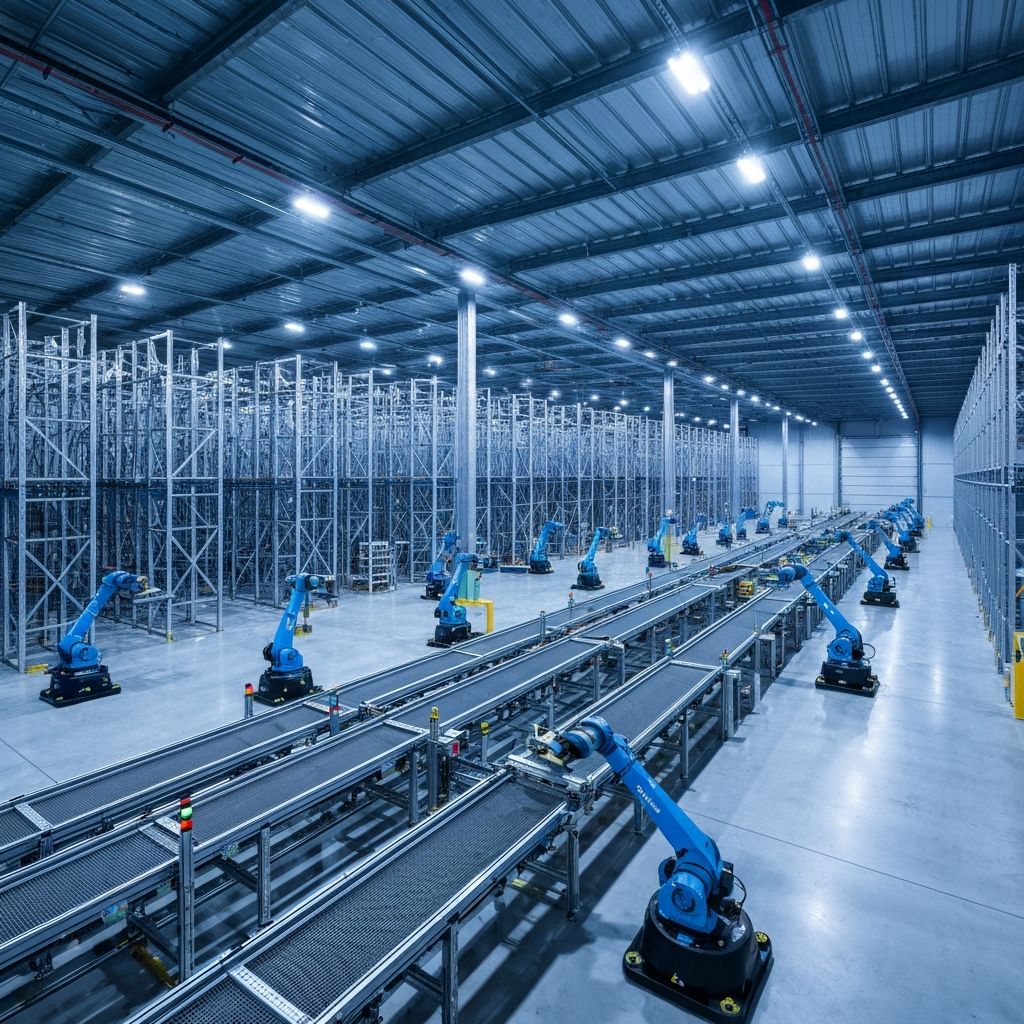
The logistics and supply chain industry is undergoing a revolutionary transformation through smart warehousing technology. As e-commerce continues to grow exponentially and customer expectations for faster delivery times reach unprecedented levels, warehouse operators are increasingly turning to advanced automation, artificial intelligence, and Internet of Things (IoT) solutions to maintain competitiveness. Smart warehousing represents the convergence of cutting-edge technology and operational excellence, fundamentally changing how inventory is managed, stored, and distributed globally.
What is Smart Warehousing?
Smart warehousing refers to the integration of advanced technologies such as robotics, artificial intelligence, machine learning, and IoT sensors into warehouse operations. This approach enables warehouses to operate with minimal human intervention while maintaining unprecedented levels of accuracy and efficiency. Unlike traditional warehouses that rely heavily on manual labor and paper-based systems, smart warehouses utilize interconnected digital systems that communicate in real-time to optimize every aspect of operations, from inventory management to order fulfillment.
The implementation of smart warehousing technology has shown remarkable results. Companies that have adopted these technologies report improvements in order accuracy rates exceeding 99.9%, picking speed increases of 300-400%, and significant reductions in labor costs. These improvements directly translate to faster delivery times, reduced operational costs, and enhanced customer satisfaction, making smart warehousing an essential investment for modern logistics operations.
Robotic Automation in Modern Warehouses
At the heart of smart warehousing lies robotic automation. Autonomous mobile robots (AMRs) and automated guided vehicles (AGVs) work alongside traditional warehouse equipment to handle the physically demanding aspects of warehouse operations. These robots are equipped with advanced sensors and navigation systems that allow them to move safely through warehouse environments, avoiding obstacles and other robots while optimizing their routes in real-time.
Robotic arms and mechanical systems have revolutionized picking and packing operations. These systems can work continuously without fatigue, handling thousands of items per hour with remarkable precision. Many advanced warehouses now employ goods-to-person systems where robots bring items to stationary workers, dramatically reducing the physical demands on warehouse staff and increasing productivity. The combination of mobile robots and mechanical arms creates a symphony of automation that dramatically increases warehouse throughput.
Beyond simple picking and packing, robotic systems now handle complex tasks including quality control, inventory verification, and even some aspects of packaging. Computer vision technology enables robots to identify products, verify quantities, and detect damaged goods automatically. This level of automation not only improves efficiency but also enhances safety by reducing workplace injuries related to repetitive tasks and heavy lifting.
Real-Time Inventory Management with IoT
Smart warehouses leverage Internet of Things (IoT) technology to maintain complete visibility of inventory at all times. Advanced sensor networks throughout the warehouse track product locations, quantities, and conditions in real-time. RFID tags, barcode systems, and computer vision work together to create an accurate, up-to-the-minute inventory picture that was previously impossible to achieve.
This real-time visibility offers tremendous advantages. Warehouse managers can instantly locate any item, preventing lost inventory and reducing the time spent searching for products. Automated systems can trigger reorders when inventory levels fall below specified thresholds, preventing stockouts while minimizing excess inventory. For businesses handling perishable goods or temperature-sensitive products, IoT sensors monitor environmental conditions continuously, alerting operators immediately if conditions deviate from safe parameters.
The data collected by IoT systems provides invaluable insights into warehouse operations. Analytics platforms process this data to identify inefficiencies, predict maintenance needs, and optimize warehouse layout. Machine learning algorithms learn from historical data to make increasingly accurate predictions about inventory demand, helping warehouses maintain optimal stock levels across their entire network.
Artificial Intelligence and Predictive Maintenance
Artificial intelligence has become a cornerstone of modern warehouse operations. AI-powered systems analyze vast amounts of operational data to identify patterns and optimize processes continuously. Predictive maintenance systems monitor equipment performance and predict failures before they occur, allowing maintenance teams to address issues proactively rather than dealing with unexpected breakdowns that disrupt operations.
Machine learning algorithms optimize warehouse operations in ways that would be impossible for humans to achieve manually. These systems learn from historical data to predict peak demand periods, automatically adjusting staffing and resource allocation accordingly. AI-powered route optimization ensures that warehouse equipment follows the most efficient paths, reducing energy consumption and increasing throughput.
Furthermore, AI systems continuously improve order accuracy through pattern recognition and anomaly detection. If an order looks unusual or potentially fraudulent, the system flags it for manual review, reducing the likelihood of costly errors. This combination of automation and intelligent oversight creates a warehouse operation that is both highly efficient and highly accurate.
Benefits and Return on Investment
The implementation of smart warehousing technology delivers substantial benefits that justify the significant initial investment. Companies report labor cost reductions of 20-40% as automation handles physically demanding tasks, while fewer errors reduce the costly expenses associated with returns and corrections. Operating costs decrease through optimized energy usage and reduced waste, while revenue increases through faster order fulfillment and improved customer satisfaction.
Scalability represents another major advantage of smart warehouses. As business volume increases, automated systems can handle the additional workload with minimal additional costs, whereas traditional warehouses would require hiring and training additional staff. This scalability enables businesses to grow without proportional increases in warehouse operating costs.
The return on investment for smart warehouse technologies varies depending on the scale of implementation and existing operations, but many companies recover their investment within 3-5 years through operational savings and revenue gains. Over a 10-year period, the cumulative savings typically far exceed the initial investment many times over.
The Future of Warehouse Technology
The evolution of smart warehousing continues at a rapid pace. Emerging technologies including drone inventory systems, advanced augmented reality for worker training, and even more sophisticated AI systems promise to further enhance warehouse operations. As these technologies mature and costs decrease, smart warehousing will become the standard rather than the exception across the logistics industry.
The transition to smart warehousing represents an essential step for businesses that want to remain competitive in an increasingly demanding logistics landscape. Companies that embrace these technologies today will find themselves well-positioned to handle the challenges and opportunities of tomorrow's supply chain environment.